
Koid9 Interview by Patrick Robinet
Unless one never pays attention to the production and mastering of an album, it is impossible not to have come across Udi Koomran if one pays any attention to the avant-garde end of progressive music. Many of the best albums to have emerged from that scene (most notably those by the band Present) are characterized by a sonic power that can be traced back to the same sound expert. This is a particularly busy year for Udi Koomran, as it has been for the Italian AltrOck label, with which he has increasingly been associated. One of the label's recent releases he has worked on is the long-awaited debut CD by the Alsace-based band Camembert.
What is exactly your professional job?
I am a sound engineer specializing in music production studio work.This includes recording mixing ,mastering and often some sort of involvement in production. Occasionally I also do live sound for bands or artists with whom I have worked in the studio.
What is the event that you give you the virus of sound production?
When I was 21 and just finished my military service I was planing a long trip abroad with a close friend .Then suddenly just a few weeks before our planed departure he called me up saying he has a change of plans and got a job as a tape op at a local recording studio . At that moment I had any clue about sound engineering or recording studios but his cancellation made me curious what was so appealing to him that he was willing to give up our mutual plan. At that time my
 uncle had an important position at the state TV and was able to help me make contact and receive a guided tour at one of the best studios in Tel Aviv at the time ( were Zingale and Atmosphera local progressive bands recorded ) .So i spent a full day at the studio watching a song being recorded overdubbed and mixed by a famous producer using some of the best session musicians of that time. Later That evening I met a friend and without hesitation announced "Now i know what I am going to do with my life "
What is your first work (live or studio production) for the progressive scene?
Although its not a "proper " typical progressive music album It is probably Tractor's Revenge's Othello ( with Roger Trigaux of Present guesting on a couple of tracks) this album was inspired by some groups such as Art Zoyd, Present, God, etc. and was released in 1999 by Musea records Gazul label.
What is your favorite work? And why?
mmm... maybe Present's Souls For Sale or 5UU's Abandonship or perhaps Ahvak -
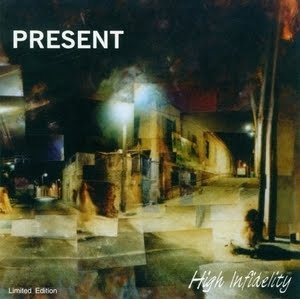 This period was exciting and we were immersed in the music to the point the outside world seized to exist .Working With Roger Trigaux and Dave Kerman were totally extreme life changing experiences for me. I learned so much. For example Roger told me his ultimate method of checking if the mix is right is if its able to make the hair at the back of your arm rise ( or give you goose bumps) Dave's spontaneous creativity and ideas have inspired me since then to always try and push the music beyond what is norm and take serious chances on the way( like the time we worked for weeks on a piece that was finally rejected cause we probably went too far with it ) .
Can you describe yourself your own way of working sound?
Well its difficult to break down the modus operendi or "method" but what I can say is that foe me music is a means of evoking emotions and by this hopefully providing the listener a deep experience that can even on rare occasions lead to some sort of mind alteration and catharsis Sound is the platform on which the music is presented to the listener. And my view is that in order to present the music in the best way the sound has to follow it and "serve" and enhance all the changes of timbre rhythm tempo dynamics etc. So the sound can hardly be static or average it has to move just as fast as the music does.
And in comparison with other avant prog producer like Bob Drake?
I admire Bob and love his unique aesthetic and signature So naturally I am flattered
 to be mentioned along with him. We both have honed and refined our craft in different ways most probably according to a personal vision and taste..I think that In his album The Shunned Country he reached a rare balance of opposites: fidelity precision with warmth and roundness that truly remarkable .Another of Bob's works that I love and has inspired me is NORMA & Chris Cutler's - L'Arpa e L'Asino.
Apparently you work a lot with Alt Rock. Please give me a word about your relationship?
I got to know Marcello Marinone through the Agartha prog website and we became friends later in 2007 he offered me to work with his partner Francesco Zaggo on the first Yugen album which was a very positive experience for all of us
 and so naturally we continued to work on a number of projects. I have great respect and appreciation for all the hard dedicated work that these people are doing all for the love of the music. This year especially I feel AltrOck has blossomed and released some extremely fine albums. And just for the record I love all things Italian ( music. coffee. food. the most beautiful language and especially Silvio Berlusconi :- ) :-)
AltrOck Productions Selection
Pierre of Camembert tells me that you spent a lot of time for their album. Do you spend same implication on others works?
Well Camembert's album was a quite demanding and challenging
 project -A big unusual line up with loads of percussion instruments an extensive brass section and Harp ( which is first for me !) the way the album was edited and sequenced is also quite unusual ( non stop 55 min with lots of short interludes which morph or cut into the big composition.) Plus we had some technical issues we need to sort out So it was a major work .And yes I admit it I don't compromise and don;t stop till it feels "right" and so sometimes it gets a bit crazy ( ask Pierre he will tell you ) It all depends on what the music needs but I guess my way of work is meticulous and time consuming .
 Camembert - Schnörgl Attahk
What are your future productions?
Well I am now working on mixing and mastering with Panzepappa a group from Norway .Yesterday I started mastering a new project for Altrock a group from Argentine called Cucamonga very exciting stuff ! Next week I am about to start working on a new Yitzhak Yedid album ( 4th time around ) and in February I will be in Lyon to mix the show for Once Upon a Time in Belgium ( Present + Univers Zero+ Aranis ) this show will also be recorded.Also some future archive releases for Soleil Zeuhl and Cuneiform Records.


 Posts
Posts

